Why animals choose warm roads
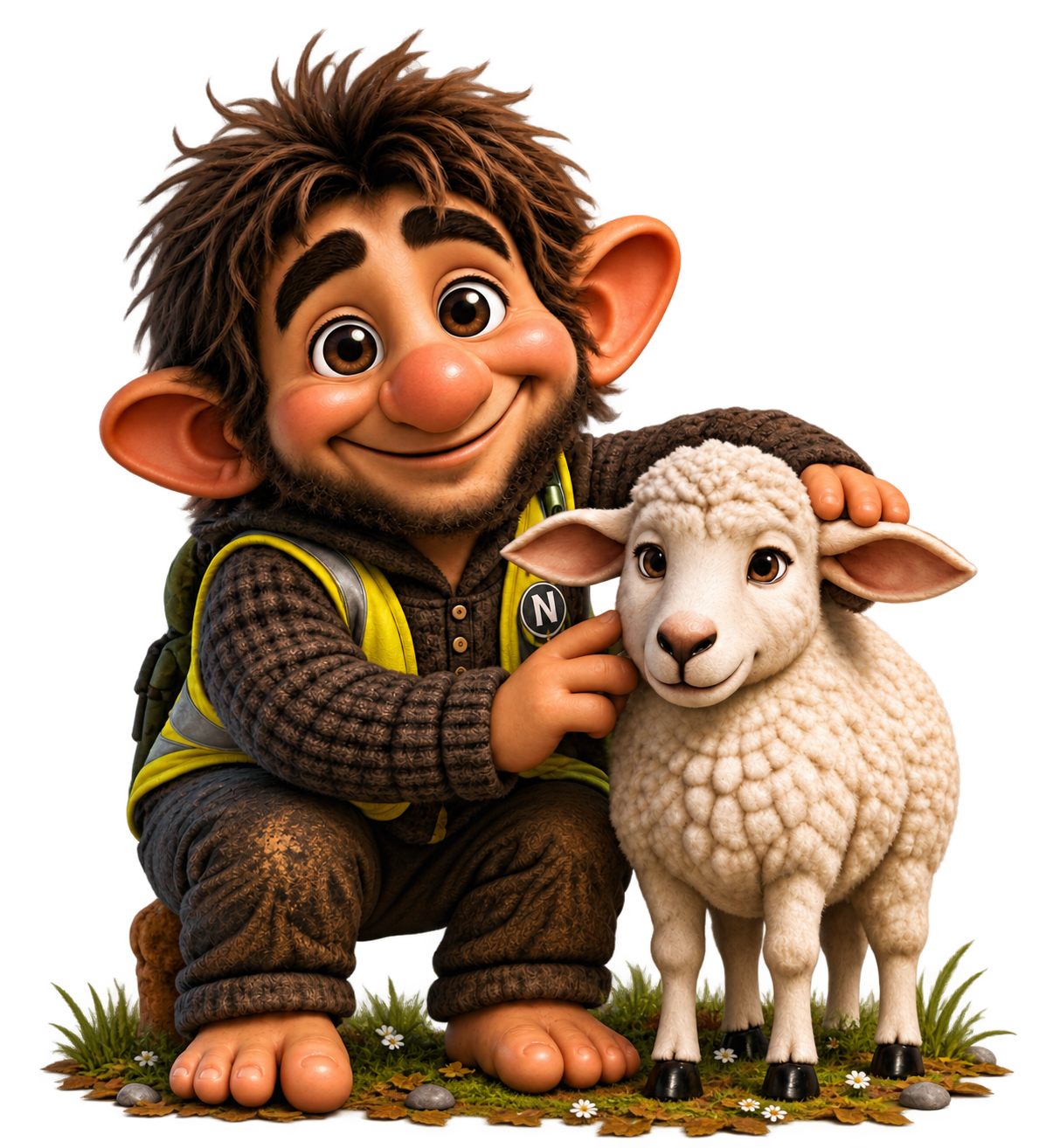
On summer evenings in Northern Norway, Sweden, and Finland, the asphalt holds the heat it has absorbed through the long Arctic day. For sheep, this is not random — asphalt is measurably warmer than the surrounding grass and rock, and animals seek it deliberately. They lie on it to rest. They graze at the roadside because the road drainage creates the richest vegetation. At midnight in July, a road that looks empty around a curve may have an animal lying in the centre of the lane on the other side.
- Sheep are the most common animal encounter on coastal Norwegian summer roads, particularly on scenic tourist routes in Lofoten, Senja, and Helgeland. On these routes, encounters are not rare — they are normal.
- Moose and their calves graze at road edges in Sweden and Finland, where the vegetation is richest at the drainage line. Calves born in early summer are still close to their mothers and move unpredictably near roads through June and July.
- Reindeer are present year-round in Sápmi — the Sámi reindeer herding areas of Finnmark, Troms, and northern Nordland in Norway, and in Swedish and Finnish Lapland. In summer, herding routes shift toward coastal pastures. If you are driving in these regions, brief encounters with reindeer are possible even in July. For deeper context on reindeer and driving, see the Polar Night wildlife module.
- The key insight that changes how you drive on these roads: a visible animal is not necessarily a safe animal. The fact that you can see a sheep on the road does not mean it will move before you reach it. Animals do not process an approaching car the way a person would. They respond to other cues — sudden movement, sound, proximity — in ways that are not always predictable from a distance.
- Smaller animals and birds also appear on summer roads — grouse, ptarmigan, and coastal seabirds sometimes walk across or sit on tarmac, particularly on mountain and coastal roads. They are less dangerous than large animals, but any sudden appearance requires the same early response: reduce speed, do not swerve. A sharp swerve for a bird is more dangerous than the bird itself.
An animal you can see is not an animal that will move. Your speed is always the variable you control.